Ferrari 250 GT Berlinetta Prototipo: One of Nine Built
Success can be its own problem. When the Ferrari 250 Europa GT debuted at the 1954 Paris Motor Show, demand overwhelmed Pinin Farina almost immediately. Of the 53 Europa GTs eventually built, 48 wore Pinin Farina bodywork, and the relationship between Ferrari and the coach builder had grown strong enough that Enzo Ferrari signed a general production contract for Pinin Farina to body Ferrari’s next GT car as standard.
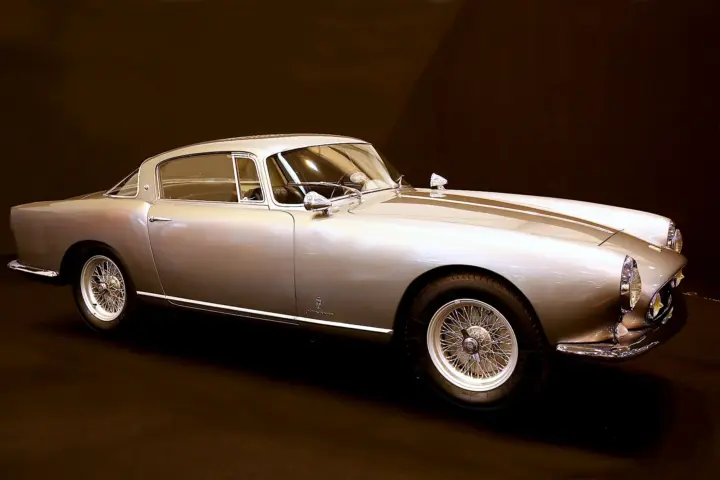
That car was the 250 GT Berlinetta, unveiled at the 1956 Geneva Motor Show. Pinin Farina drew an unusual shape for it, borrowing styling influences from the larger 410 Superamerica, while Ferrari refined the chassis and engine using lessons learned from the Europa GT. Under the hood sat the Colombo-designed 3.0-liter V12, producing 240 hp through three Weber carburetors, paired with the model’s newly lengthened wheelbase.
But Pinin Farina still couldn’t keep pace with Ferrari’s ambitions. After hand-building only a handful of Berlinetta prototypes, commonly cited as nine, production was handed to the smaller coachbuilder Carrozzeria Boano, who went on to produce between 63 and 79 examples as the “250 GT Boano” over the following two years, closely following Pinin Farina’s original design.
This particular prototype carries a story as distinctive as its coachwork. It was purchased new by Guido Cantelli, a celebrated orchestra conductor and personal friend of Enzo Ferrari. Cantelli died in a plane crash just months after taking delivery, and Ferrari himself bought the car back from his widow. After passing through several subsequent owners, wearing red paint for a time before being restored to its original color and reunited with its matching-numbers gearbox, this 250 GT Berlinetta remains one of only a handful of the original nine prototypes believed to survive today, a rare and deeply documented piece of early Ferrari road car history.