2001 Volkswagen W12 Nardò
Volkswagen’s W12 story began as a styling exercise. The W12 Syncro concept series, first shown earlier in the 2000s, explored what a mid-engined Volkswagen flagship might look like, built around the company’s then-new W12 engine architecture, twelve cylinders arranged in two staggered banks of six to keep the overall engine block remarkably compact. The concept drew attention, but Volkswagen had bigger ambitions for it than a motor show stand.
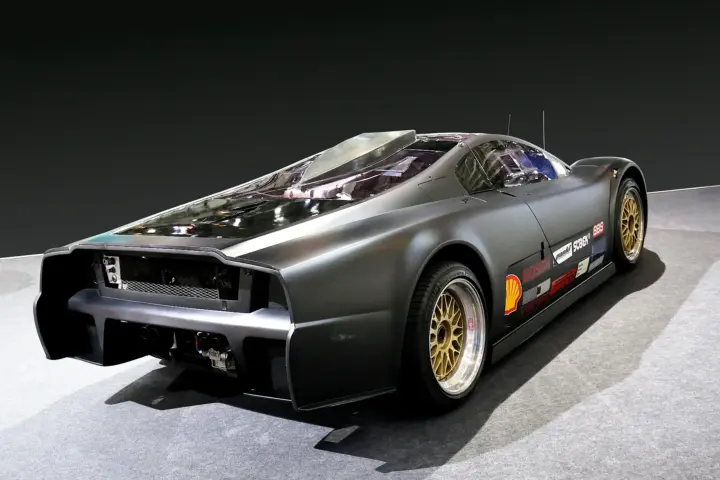
In 2001, the company announced it would take a purpose-modified version of the W12 to the Nardò Ring, a 7.8-mile banked, closed circuit in southern Italy built specifically for sustained high-speed endurance testing, and attempt to break the 24-hour world speed record. The naturally aspirated 6.0-liter W12, now tuned to 591 hp, drove all four wheels through Volkswagen’s Syncro system and a six-speed sequential gearbox. On October 14, 2001, with then-Volkswagen Group chairman Ferdinand Piëch on hand to watch, the car averaged 183.5 mph over the full 24 hours, covering 4,402 miles and claiming nine records. The car made a pit stop every 80 minutes throughout, refueling, swapping tires, and changing drivers, all without the clock ever stopping.
Piëch wanted more. Less than four months later, on February 23, 2002, the team returned to Nardò and pushed the car to a sustained average of 200.6 mph over 4,809 miles, setting seven world records and twelve international class records in a single run. According to the FIA, all nine of the original world records set during these two attempts still stand today, more than two decades later.
The W12 itself never reached production. Volkswagen’s attention soon shifted to a different flagship project that would eventually become the Bugatti Veyron. But the W12 engine found a long life of its own, powering the Audi A8 the same year it set its Nardò records, followed by the Volkswagen Phaeton, Touareg, and generations of Bentley’s W12-powered flagships for years afterward. Even Spyker used the W12 engine.