Classic Tractors & Farm Machinery – A Century of Iron, Steam and Diesel
Before the supercar, there was the workhorse. Long before horsepower was measured at the drag strip or the racing circuit, it was measured in fields, in the pull of a plough, the bite of a crawler track, the grind of a threshing drum. These machines didn’t race. They worked. And in working, they shaped the world.
This collection brings together fine art photography of classic tractors and vintage farm machinery spanning more than six decades of agricultural engineering history, from a 1908 British steam engine built before the First World War to a 1972 American diesel giant still turning heads at shows today. German engineering precision. American prairie muscle. Italian ingenuity. Polish post-war industry. Argentinian innovation. Swiss reliability. All of it, captured at shows and events across Germany, the Netherlands, and beyond.
Whether you grew up around these machines, restored one yourself, or simply admire the raw mechanical beauty of cast iron and exposed pistons. These images make extraordinary wall art for the home, workshop, barn office, or collector’s space.
The Collection
A Century of Mechanical History from 1908 to 1972
The photographs in this collection are organized by era, reflecting the evolution of agricultural machinery from the age of steam through the golden years of diesel. Each machine has been photographed with the care and attention it deserves as a piece of engineering history, not merely farm equipment.
ERA 1: The Steam & Early Petrol Age (1908 – 1928)
Steam, Fire and the First Engines – 1908 to 1928
These are the pioneers, machines that predate the tractor as we know it, built in an era when steam still competed with petrol and the word “horsepower” was still being borrowed from the horse. Heavy, slow, and brutally powerful, they represent the dawn of mechanized agriculture.
1908 Ruston Proctor General Purpose Engine (UK)
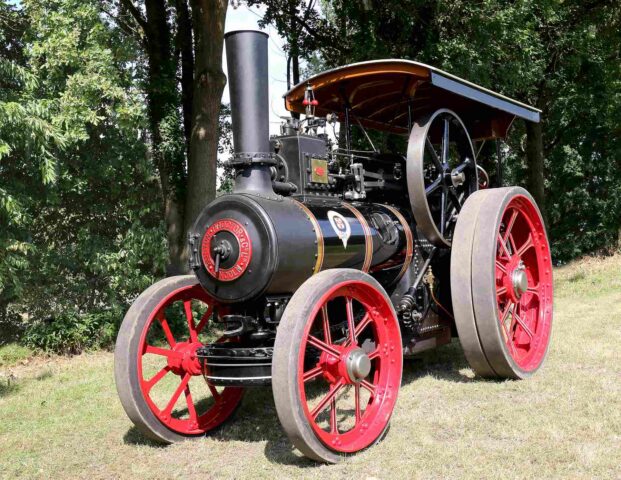
Built in Lincoln, England, Ruston Proctor was one of the great names of British steam engineering. This General Purpose Engine predates the First World War and represents the apex of portable steam power, an iron giant that could drive threshing machines, sawmills, and drainage pumps with equal authority. Available as a fine art print and on metal.
1917 Lanz Landbaumotor (Germany)
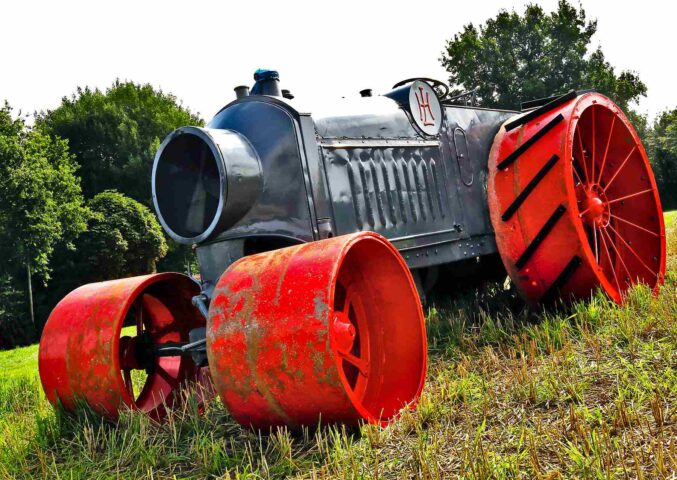
Heinrich Lanz AG of Mannheim would go on to build the most iconic tractor in German history. But in 1917, the Landbaumotor (“Agricultural Motor”) was an early expression of that engineering ambition, a semi-diesel hot-bulb engine that required no spark plug and ran on almost any combustible liquid. Robust, simple, and almost indestructible.
1917 John Deere Waterloo Boy (USA)
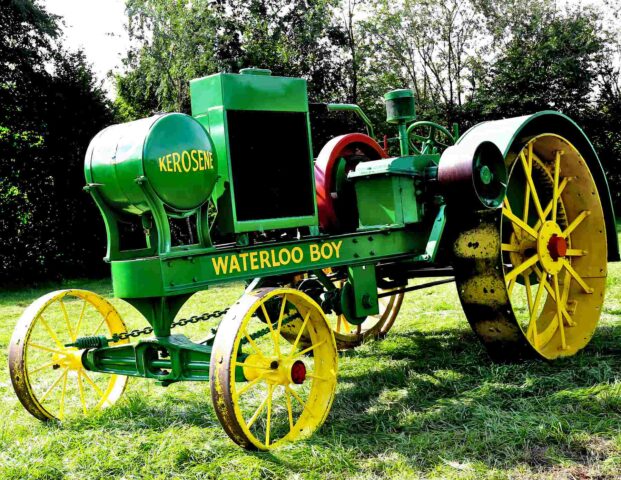
The machine that made John Deere a tractor company. When Deere & Company purchased the Waterloo Gasoline Engine Company in 1918, it acquired the Waterloo Boy along with it, a two-cylinder kerosene tractor that had been in production since 1914. This 1917 Waterloo Boy Model N example is a rare survivor of the model that launched one of the world’s great agricultural dynasties.
1919 Hanomag WD 80 Motortragpflug (Germany)
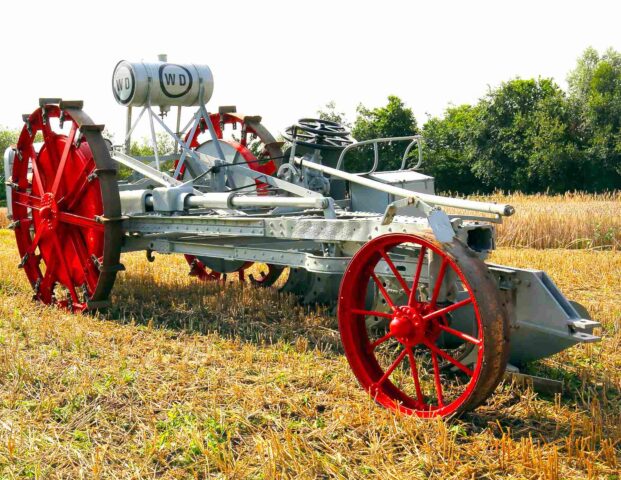
Hannoversche Maschinenbau AG, Hanomag, was one of Germany’s most versatile engineering firms, producing everything from tractors to locomotives to automobiles. The WD 80 Motortragpflug (“motor carrying plough”) is an unusual machine: the plough is integrated into the tractor frame rather than towed behind it. A fascinating piece of early German agricultural engineering.
1920 Wallis (USA)
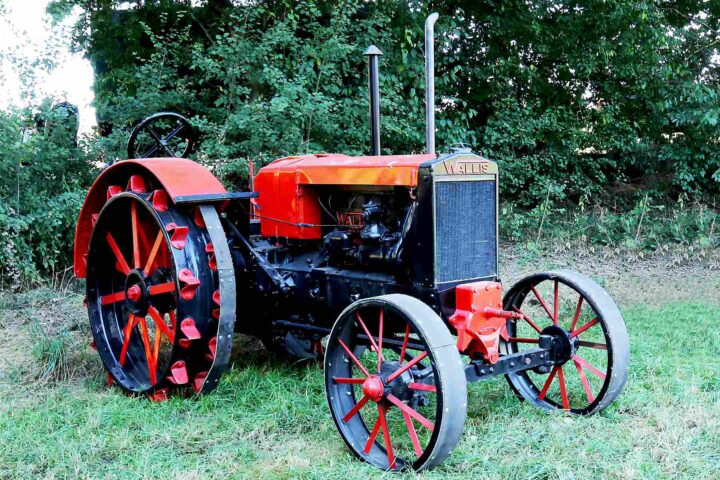
The Wallis tractor, built by the Massey-Harris Company’s American predecessor, was famous for its “unit frame” construction, a boiler-plate U-frame that formed both the chassis and the crankcase housing. Ahead of its time in engineering terms, the Wallis was a significant influence on tractor design throughout the 1920s.
1921 Lanz Lokomobil Steam Engine (Germany)
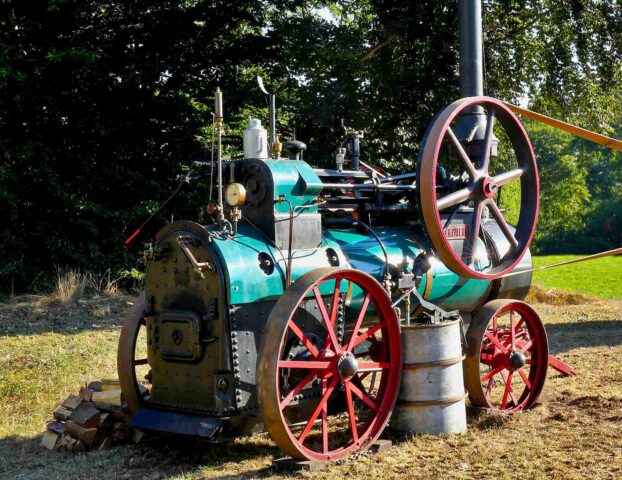
A Lokomobile is not quite a tractor and not quite a stationary engine, it is a self-propelled steam power unit designed to be driven to a field and parked. This 1921 Lanz example is an extraordinary surviving piece of agricultural steam heritage, a reminder that in the early 1920s, the internal combustion engine had not yet won the argument.
1925 Stock Raupenstock (Germany)
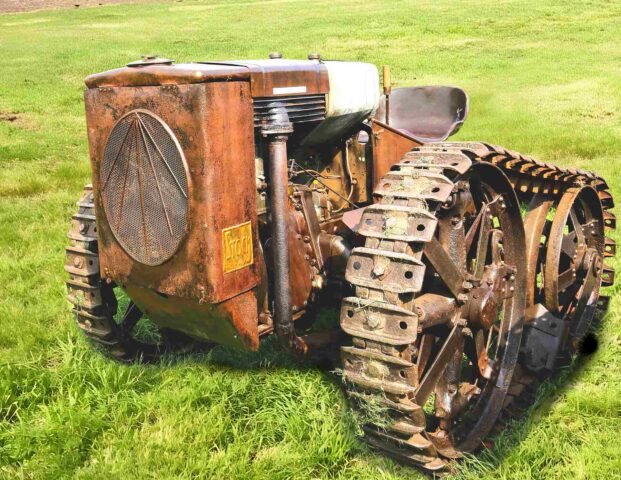
The 1925 Stock Raupenstock (also known as the Stock Crawler) was a groundbreaking agricultural tracked tractor developed by the German company Stock Motorpflug GmbH in Berlin. The vehicle went into series production in 1925 and is considered an important pioneer of agricultural mechanization. At a time when most tractors were still equipped with heavy iron wheels, Stock opted for an innovative track system. This distributed the weight optimally on soft or wet ground and provided superior traction.
1925 Dampfwalze Ernesto Breda Milano Steam Roller (Italy)
Not strictly a farm machine, but an extraordinary piece of industrial heritage. This Breda steam roller from Milan represents the Italian heavy engineering tradition of the inter-war period. At shows, it invariably draws a crowd, the scale, the noise, and the sheer presence are unlike anything else on the field.
1928 Huber Super Four 25-50 (USA)
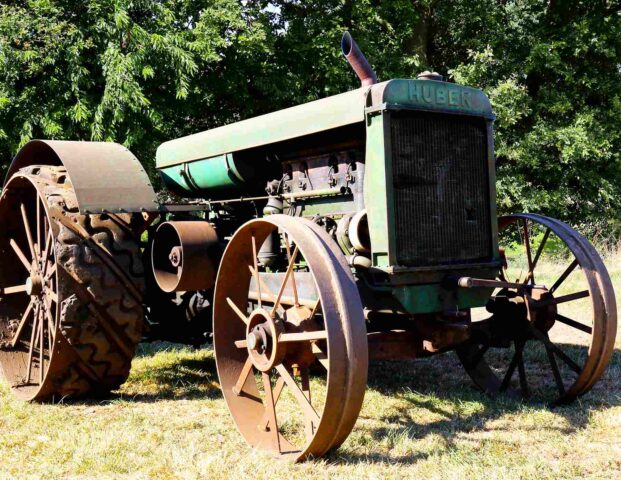
The Huber Manufacturing Company of Marion, Ohio built tractors from 1898, making them one of the oldest tractor manufacturers in America. The Super Four 25-50 is a four-cylinder machine rated at 25 horsepower at the draw-bar and 50 at the belt. Heavy, agricultural, and beautifully patinated with age.
1928 Lanz HR 4 (Germany)
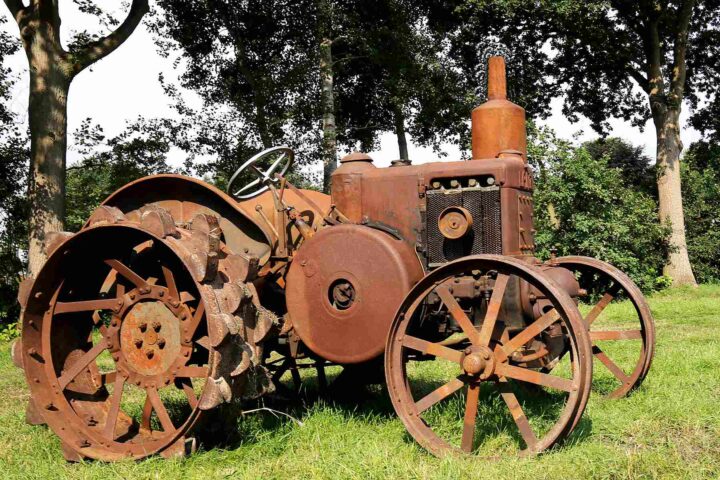
The HR 4 sits just before Lanz’s legendary Bulldog series hit its full stride. A hot-bulb semi-diesel of characteristic Lanz simplicity, the HR 4 was designed for German farmers who needed a reliable machine that a blacksmith could repair in a barn. It delivers on every count.
ERA 2: The Depression and Pre-War Years (1930–1939)
Iron Horses of the 1930s – The Pre-War Decade
The 1930s brought economic hardship and mechanical refinement in equal measure. Tractor design became more sophisticated, rubber tires began replacing steel wheels,and diesels began their long conquest of the petrol engine. In Germany, the Lanz Bulldog became a national icon. In America, the row-crop tractor transformed farming forever.
1930 IHC Farmall Regular (USA)
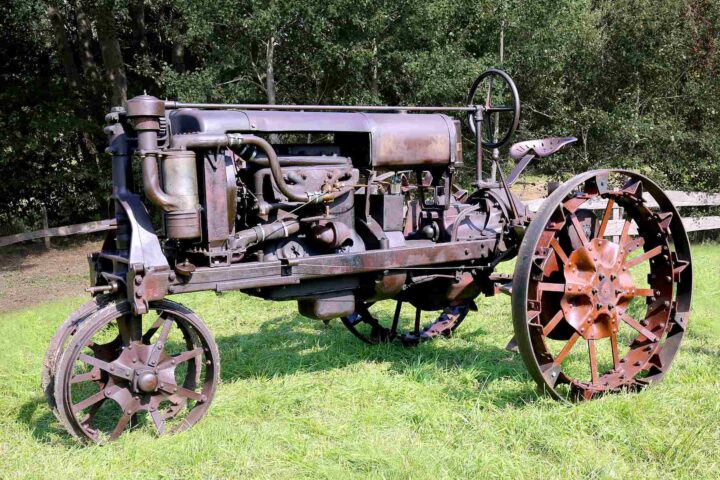
International Harvester’s Farmall was a revolution. Where earlier tractors were designed to pull, the Farmall was designed to cultivate, with high ground clearance, tricycle front axle, and rear-mounted implements. The Farmall Regular, introduced in 1924 and built through the early 1930s, is the grandfather of the row-crop tractor.
1931 McCormick-Deering T20 Crawler (USA)
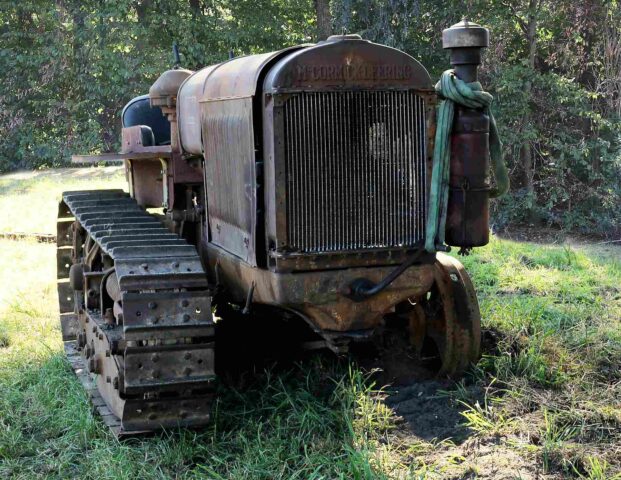
Before International Harvester unified its branding, it sold tractors under the McCormick-Deering name. The T20 Crawler is a tracked industrial/agricultural machine built for orchards, hillsides, and heavy soil conditions where wheeled tractors could not grip. A compact, purposeful machine.
1932 Farmall F-20 with Piper Speedigger attached (USA)
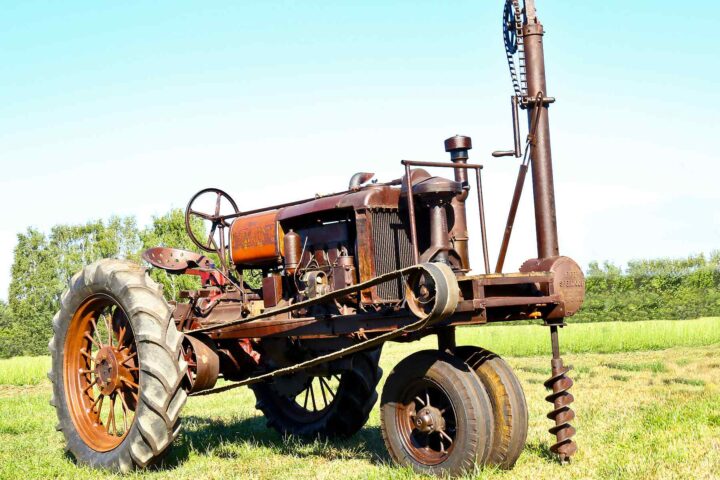
The F-20 was the successor to the Farmall Regular, more powerful, more refined, and built in enormous numbers through the 1930s. This example is photographed with a Piper Speedigger attachment: an implement for digging post holes driven by the tractor’s power take-off. A working machine, captured in working trim.
1936 Hanomag AR 38 (Germany)
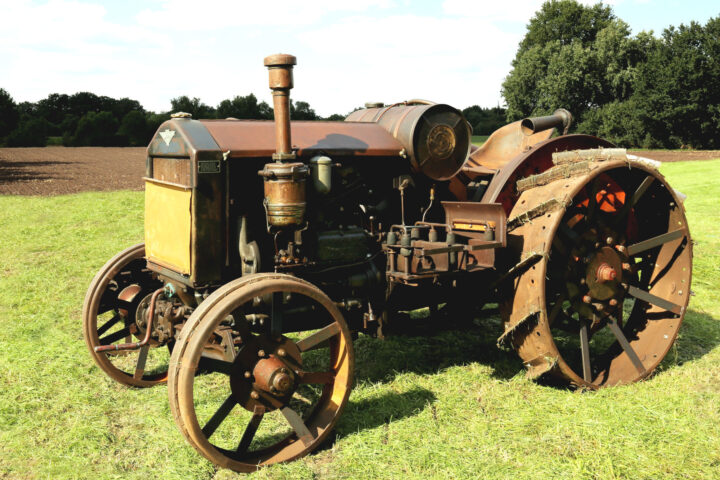
From Germany comes this 1936 Hanomag AR 38, powered by a water-cooled four-cylinder diesel engine, one of the defining pre-war tractors from the Hanomag works in Hannover. Photographed low and wide in a freshly plowed field, its massive spiked steel drive wheels and copper exhaust stack tell the story of an engineering approach built for raw traction over comfort. Decades of exposure have taken the paint back to bare iron and rust – a machine that has clearly earned its place in this collection, standing exactly where it always worked best.
1937 Fendt F 18 Dieselross (Germany)
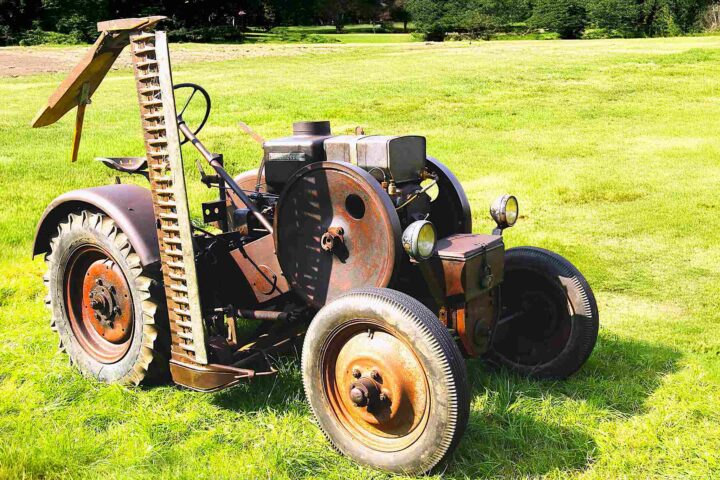
“Dieselross”, diesel horse, was the name Fendt gave to its tractors, and few names in German agriculture carry more weight. The F 18 Dieselross is an early example of what would become one of Germany’s most prestigious tractor brands. Compact, single-cylinder, and built in Marktoberdorf in Bavaria, it marks the beginning of a lineage that continues to this day.
1939 Orenstein & Koppel SA 751 (Germany)
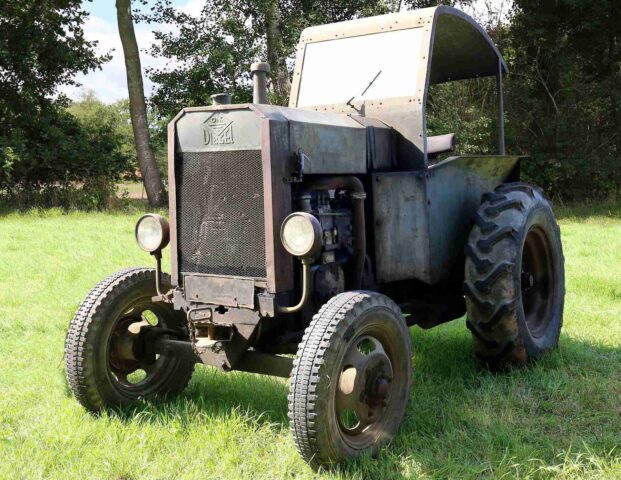
Orenstein & Koppel was primarily known for its industrial equipment, cranes, railways, excavators, but the SA 751 represents the company’s foray into agricultural machinery. A rare machine, seldom seen at shows and rarely photographed to this standard.
1939 Kramer K18 (Germany)
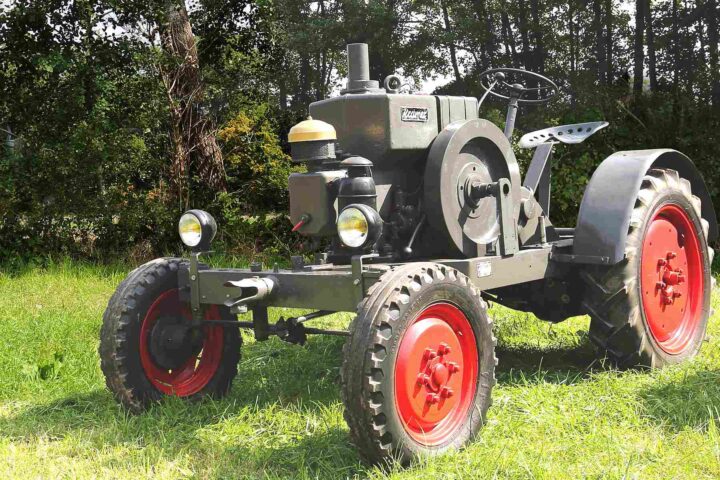
Kramer-Werke of Gutmadingen, Baden, built small tractors for small holders and market gardeners throughout the 1930s and 1940s. The K18 is a characterful little machine with a personality disproportionate to its modest horsepower.
ERA 3: Wartime and Immediate Post-War (1940–1950)
Working Through War — 1940 to 1950
Agricultural machinery didn’t stop during the Second World War, if anything, it became more critical than ever. Food production was a strategic priority, and tractors were military assets as much as farm tools. Some machines from this period bear the marks of wartime compromise: the Hanomag R 40 Holzgas, running on wood gas when diesel was rationed, is one of the most remarkable survival stories in agricultural history.
1940 John Deere Combine Harvester (USA)
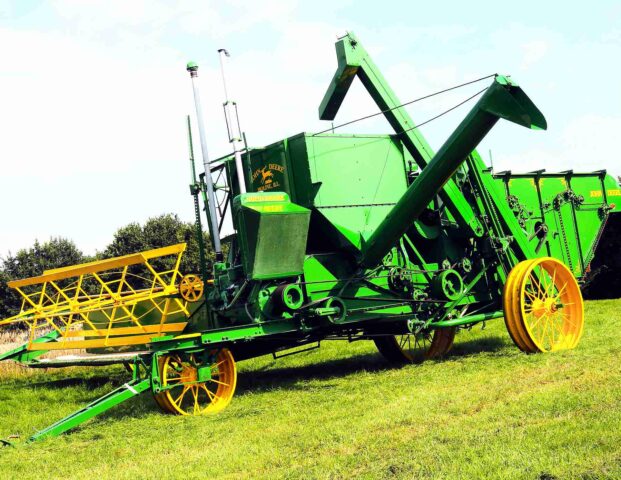
The combine harvester transformed grain farming more profoundly than any other single machine. This 1940 John Deere example represents the technology at a pivotal moment, just before the self-propelled combine would replace the tractor-drawn type entirely.
1940 Farmall F-12G (USA)
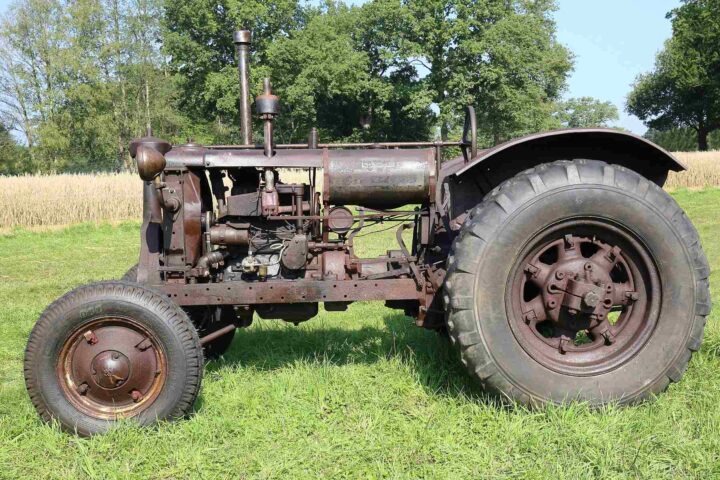
The F-12 was International Harvester’s small-farm Farmall, designed for one- and two-horse farms making their first step toward mechanization. Introduced in 1937, the F-12G was the very first tractor model built by International Harvester (IHC) at its Neuss am Rhein factory in Germany. IHC added the letter “G” to the model name to specifically distinguish the German-built units from their standard U.S. counterparts.
While many assume the “G” refers to “gasoline,” this is historically incorrect. The tractor actually featured a distillate (dual-fuel) engine. Operators started the engine using a small amount of gasoline to warm it up, and then switched to cheaper tractor distillate or kerosene once the engine reached its optimal operating temperature.
1942 Normag NG 22 (Germany)
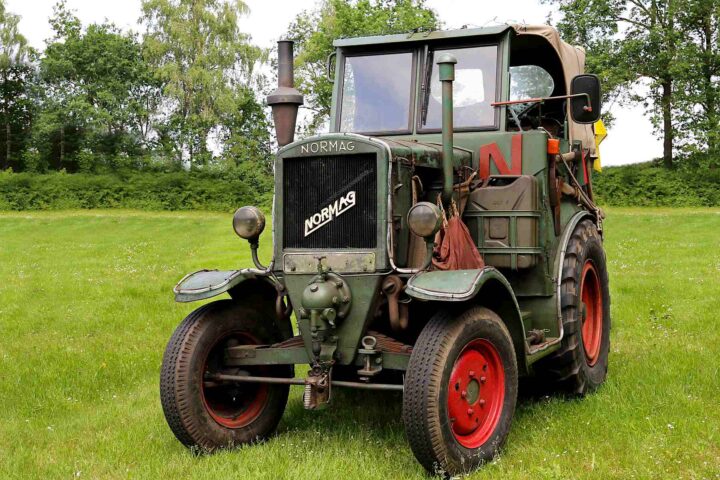
The NG 22 Diesel, built by Normag GmbH in the small town of Nordhausen in Thuringia, Germany, on the southern edge of the Harz Mountains, is one of the rarest tractors you’ll ever see at a classic car show—and almost certainly a very rare sight in art photography. With its distinctive enclosed cab, the striking black radiator grille featuring the white “NORMAG” lettering, and the red “N” logo on the olive-green cab, this 1942 model was photographed almost head-on. It is fully equipped for work, exactly as it left the field. A machine from a forgotten factory that is finally getting the place it deserves.
1942 Case SC (USA)
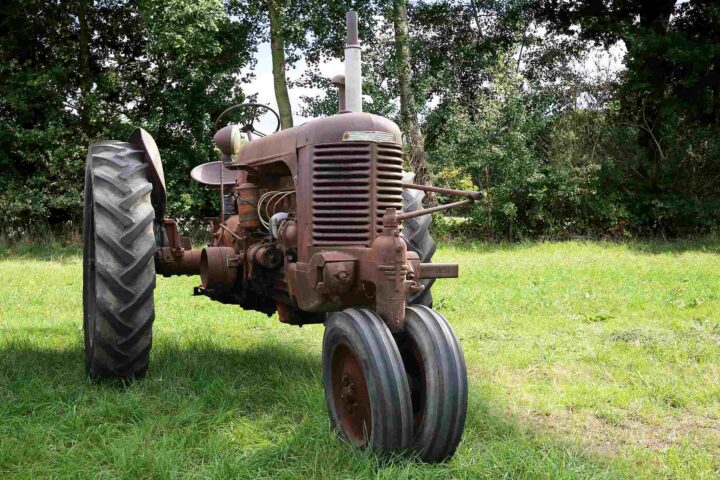
The Case SC was J.I. Case’s row-crop tractor of the early 1940s, a direct competitor to the Farmall and John Deere row-crop machines. Clean lines,characteristic Case styling, and that orange paint scheme that made Case machines immediately recognizable across a field.
1942 Hanomag R 40 Holzgas (Germany)
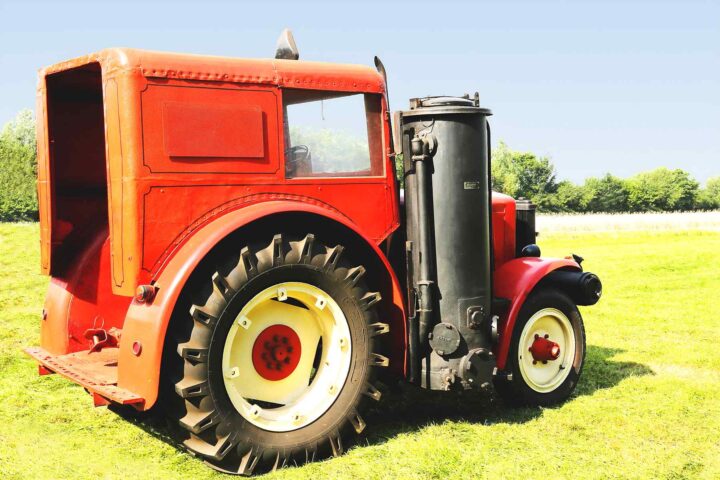
Perhaps the most extraordinary machine in this entire collection. The Holzgas (“wood gas”) designation means this Hanomag R 40 was converted to run on a wood gasifier, a pyrolysis unit that converts wood chips into combustible gas when liquid fuel is unavailable. Produced during the Second World War when diesel was strictly rationed, Holzgas tractors are exceptionally rare survivors. This is agricultural history on four wheels.
1943 Hanomag R 40 (Germany)
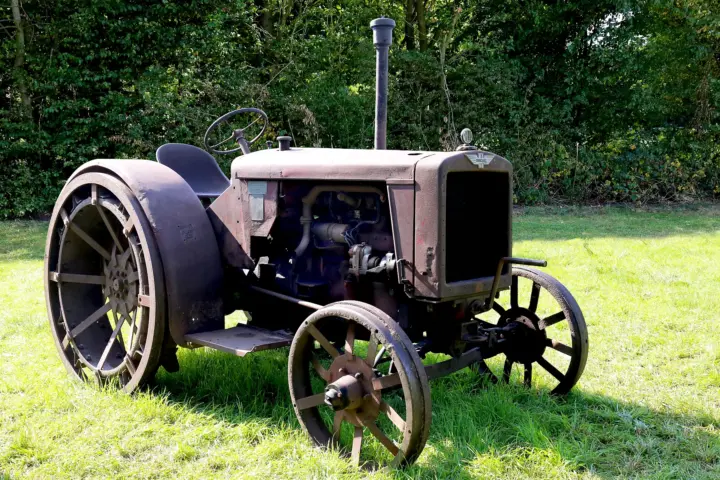
The standard diesel version of the R 40, built in the same year as the Holzgas model above. Comparing the two machines, one fueled by diesel, one by wood, is a vivid illustration of the wartime material shortages that shaped German industrial history.
1943 Hanomag R 40 Engine Detail
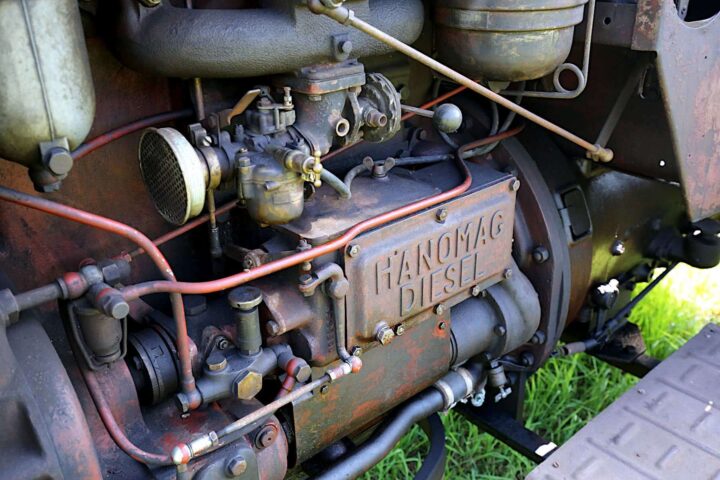
A close-up study of the R 40’s engine, an exposed view of the mechanical heart of a wartime German tractor. For the engineering enthusiast, this is the equivalent of a supercar engine bay shot: all function, no decoration.
1950 Allis Chalmers Model B (USA)
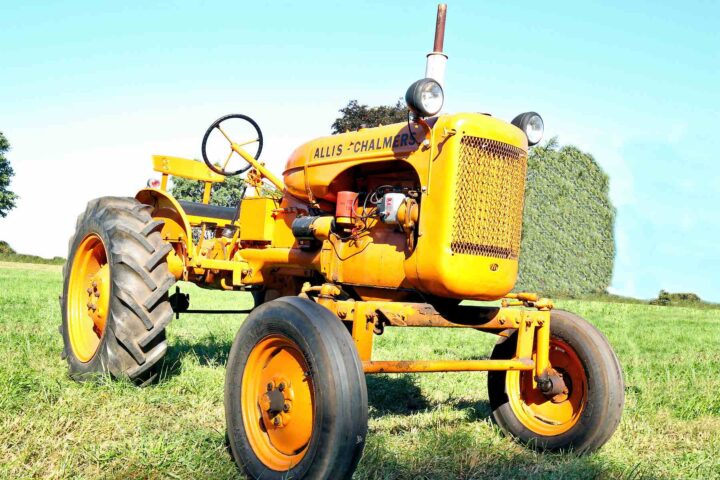
The Allis Chalmers Model B was one of the most successful small tractors in American history, built from 1937 through 1957 in very large numbers. By 1950, it was a proven, affordable, and practical machine for the smaller American farm. The distinctive Persian Orange paint scheme makes these tractors immediately recognizable.
1950 Deuliewag D15 (Germany)
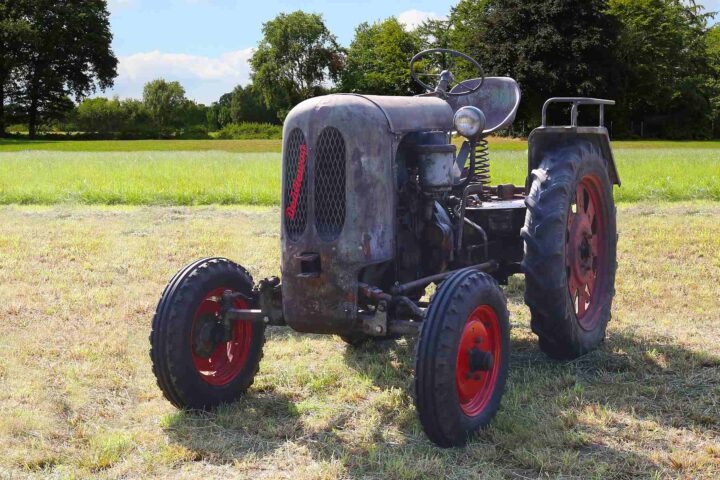
Deuliewag (Deutsche Lieferwagen GmbH) is a name closely associated with the Lanz heritage. The D15 is a compact post-war German tractor built for the recovering agricultural sector of the early Federal Republic.
1950 Massey-Harris Pony Tractor (Canada)
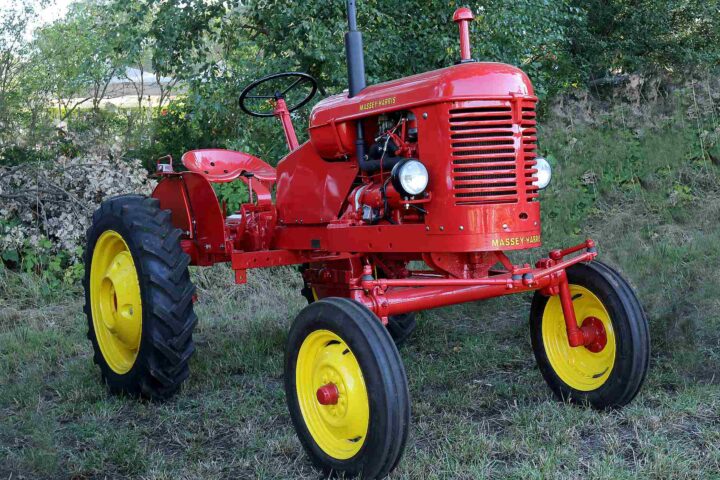
The Massey-Harris Pony was designed specifically for small farms and market gardens, a genuinely compact tractor that could fit where its bigger siblings could not. Produced from 1947 onwards, the Pony sold well in both North America and Europe, and remains one of the most charming tractors of the post-war decade.
1950 International Harvester McCormick Farmall FC (USA)
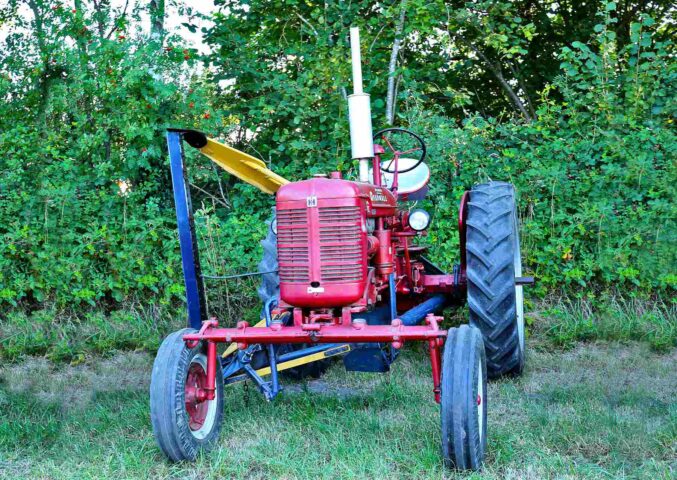
The Farmall C was IHC’s mid-range row-crop machine of the late 1940s and early 1950s, a versatile, well-balanced tractor that sold in large numbers on both sides of the Atlantic. By 1950, the Farmall C (here in FC trim) was among the most widely used tractors in American agriculture.
ERA 4: The Golden Age of the Farm Tractor (1952–1966)
Diesel Dominance – The 1950s and 1960s Golden Age
The 1950s and early 1960s represent the golden age of the farm tractor. Diesels had definitively won the fuel argument. Hydraulic lifts became standard. Live PTO and independent rear linkage gave farmers unprecedented versatility. And across Europe and America, tractor manufacturers produced machines of character, quality, and mechanical elegance that still inspire passion today.
1952 Ursus C-45 (Poland)
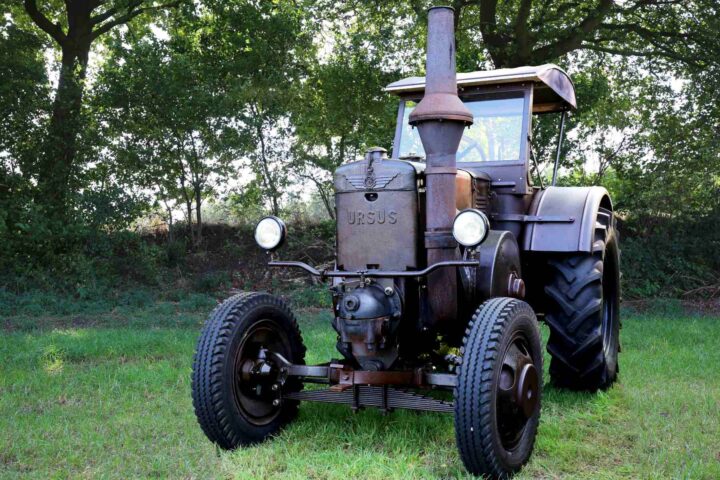
The Ursus factory in Warsaw was one of the most important industrial enterprises of post-war Poland. The C-45, based on Czechoslovak and ultimately pre-war German designs, was the tractor that mechanized Polish agriculture in the 1950s. A piece of Central European industrial history rarely seen in Western Europe.
1953 Minneapolis-Moline UTS Prairie Gold (USA)
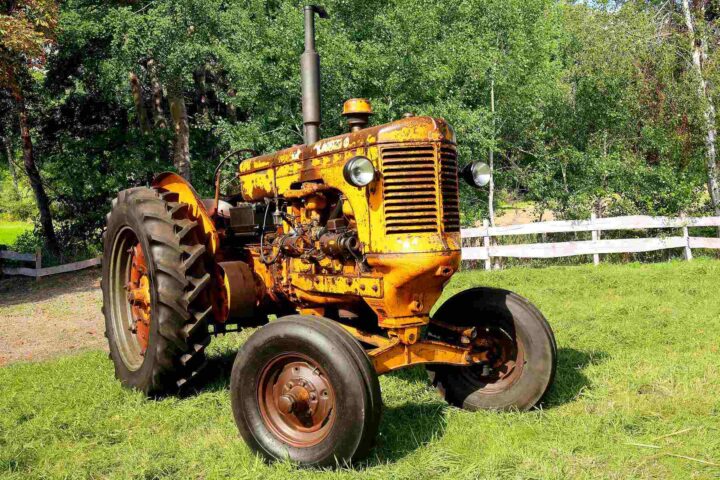
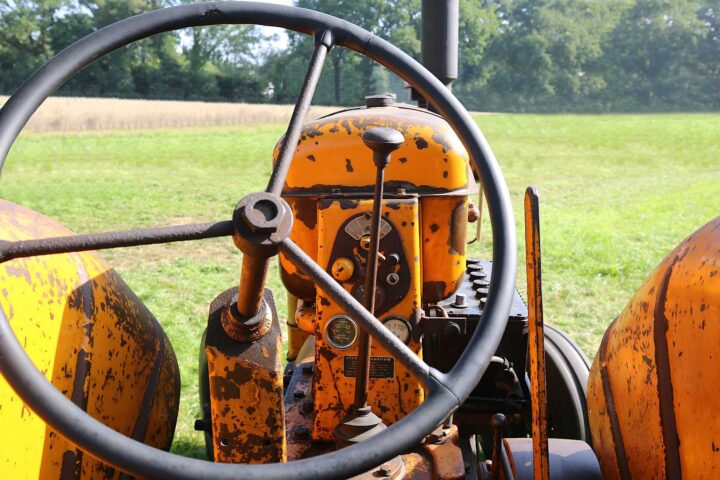
Minneapolis-Moline was one of the great American tractor makers, less well-known today than John Deere or Case, but building machines of considerable quality and distinctive style. The UTS in Prairie Gold (the company’s signature yellow-gold livery) is an imposing, handsome machine that photographs beautifully.
1954 I.A.M.E. “El Pampa” T01 (Argentina)
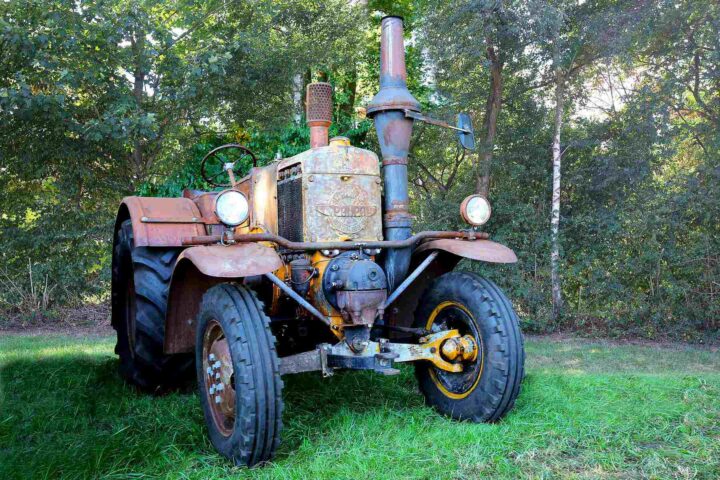
One of the rarest machines in this collection. I.A.M.E. – Industrias Aeronáuticas y Mecánicas del Estado – was an Argentine state enterprise that built everything from aircraft engines to motorcycles to this tractor, the”El Pampa.” A piece of South American industrial heritage almost never seen in Europe.
1955 Lamborghini DL25-N (Italy)
Before Ferruccio Lamborghini built the sports cars that made his name immortal, he built tractors. This 1955 DL25-N is from the original Lamborghini Trattori production, built in Cento, Emilia-Romagna, using German MWM engines. The agricultural heritage of the supercar brand, in fine art form.
1956 Hanomag K 55 Kettenschlepper (Germany)
Kettenschlepper – “chain puller” – is the German term for a crawler tractor, and the K 55 is Hanomag’s mid-1950s example.Built for forestry, heavy land clearing, and construction work where rubber tires were inadequate, the K 55 is a powerfully built machine of considerable visual presence.
1957 Lanz Bulldog D 2016 (Germany)
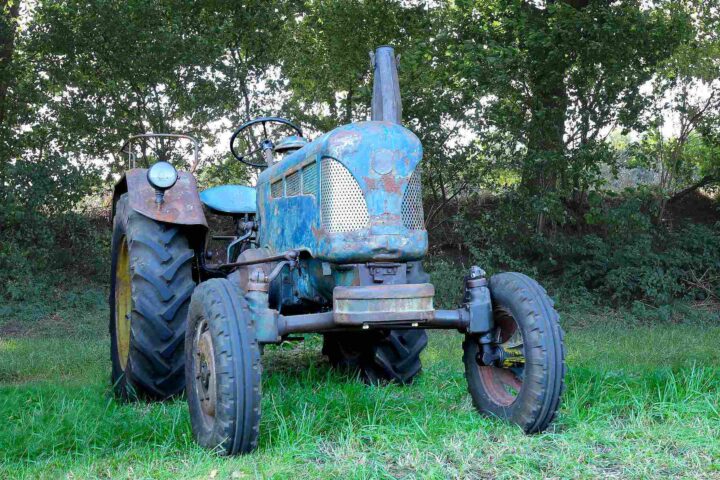
This is the one. The Lanz Bulldog is arguably the most iconic tractor in European agricultural history, the machine that defined German farming from the 1920s through the 1950s. The hot-bulb semi-diesel engine, the distinctive barrel-shaped hood, the characteristic single-cylinder thump, nothing else sounds or looks like a Lanz Bulldog. The D 2016, built in the final years of independent Lanz production before the John Deere takeover, is among the most desirable models.
1957 Hürlimann D 80 Super SPE Petrol (Switzerland)
Hans Hürlimann of Wil, Switzerland built tractors of exceptional quality from the 1920s onwards, and the Hürlimann name remains a mark of Swiss agricultural engineering precision. The D 80 Super SPE is an unusual petrol variant — most Hürlimanns of this period ran on diesel —making it a rare find.
1958 Porsche Diesel Junior (Germany)
Yes, Porsche built tractors. From 1956 to 1963,Porsche-Diesel Motorenbau GmbH of Friedrichshafen produced a range of air-cooled diesel tractors under the Porsche name. The Junior is the smallest of the range — a single-cylinder, air-cooled machine with unmistakably Porsche engineering DNA. For collectors who appreciate both Stuttgart sports cars and agricultural heritage, this machine is the Holy Grail.
1959 Fordson Dexta (UK/USA)
The Fordson Dexta was Ford’s answer to the Ferguson TE20 — a compact, versatile, three-cylinder diesel tractor designed for the smaller British and European farm. Built at Dagenham in Essex, the Dexta became one of the most popular tractors of the late 1950s and early 1960s on both sides of the Atlantic.
1959 J.I. Case 900B Diesel (USA)
The Case 900B is the flagship of Case’s 1950s diesel range — a large, powerful machine built for the prairie farms of the American Midwest.With its characteristic flambeau red livery and impressive proportions, the 900B is a commanding subject for fine art photography.
1959 International Harvester TD-6 Crawler (USA)
IHC’s TD-6 is a mid-size crawler tractor designed for construction and heavy agricultural work. Tracked, powerful, and purposeful — the TD-6 represents the industrial side of the IHC range, a world away from the Farmall row-crop machines but equally important to the story of American mechanization.
1966 Ford 4000 (USA)
By the mid-1960s, the tractor had evolved into something very close to its modern form. The Ford 4000 is a competent, well-built machine of the period— part of Ford’s “Force” range and typical of the quality and reliability that made Ford tractors a staple of farms on both sides of the Atlantic.
1966 John Deere Lanz (Germany)
When John Deere acquired Heinrich Lanz AG of Mannheim in 1960, the resulting machines carried both names for a transition period.The 1966 John Deere Lanz represents this fascinating chapter — an American brand stamped onto a German factory’s production, bridging two great tractor traditions.
1966 John Deere Lanz Engine Detail
The engine bay of the 1966 John Deere Lanz — a study in American-influenced German diesel engineering. Paired with the full machine photograph, this makes an exceptional diptych for the enthusiast’s wall.
ERA 5: The Modern Classic (1969–1972)
Into the Modern Age – 1969 to 1972
1969 Schmotzer Kombi Record (Germany)
Schmotzer of Bad Waldsee specialized in specialist horticultural and vineyard equipment, narrow, precise machines for working between rows of vines and vegetables. The Kombi Record is a versatile inter-row cultivator combination, representative of the highly specialized agricultural machinery that German engineering excelled at.
1972 International Harvester 1466 Diesel Farmall (USA)
By 1972, the tractor had become a serious high-horsepower machine. The IH 1466 is a turbocharged V-8 diesel developing around 131 horsepower, a far cry from the Farmall Regular of 1930. Red, powerful, and impressive in scale, the 1466 represents the apex of the classic Farmall lineage before corporate mergers and new branding changed everything.
1972 International Harvester 1466 Engine Detail
The turbocharged V-8 engine of the IH 1466, photographed in detail. A mechanical sculpture in red and chrome – as worthy of wall space as any supercar engine bay.