Classic Racing Car Interiors & Cockpits | Kraaibeek Collector Edition
Explore the interiors and cockpits of legendary race cars through the photography of Peter Kraaibeek. This growing collection captures the driver’s view of historic and classic racing cars, from early Grand Prix machines and pre-war racers to iconic competition cars from later eras.
These photographs look beyond the familiar exterior of a race car to reveal the world inside the cockpit: steering wheels, dashboards, gauges, instruments, controls, seats and mechanical details that connect the driver directly with the machine. Each photograph offers a close look at the design, engineering and character of a particular racing car and its era.
The Kraaibeek Collector Edition brings together automotive photographs of remarkable race car interiors and cockpits, including Grand Prix cars, historic racing machines and other significant competition automobiles. Whether you are a classic car enthusiast, motorsport fan, racing historian, collector or admirer of automotive design, this collection offers a different perspective on racing history — from the driver’s seat.
Explore the individual photographs below to discover the cars, their cockpits and the stories behind these remarkable machines.
Featured automobiles include historic Grand Prix and racing cars from manufacturers such as Alfa Romeo, Auto Union, Bugatti, Maserati and Maybach, with additional classic racing cars to be added to the collection.
Photography © Peter Kraaibeek. All photographs in this collection are protected by copyright.
Kraaibeek Collector Edition
1920 Maybach Spezialrennwagen – Dashboard
A Glimpse into the Cockpit of an Early German Racing Machine
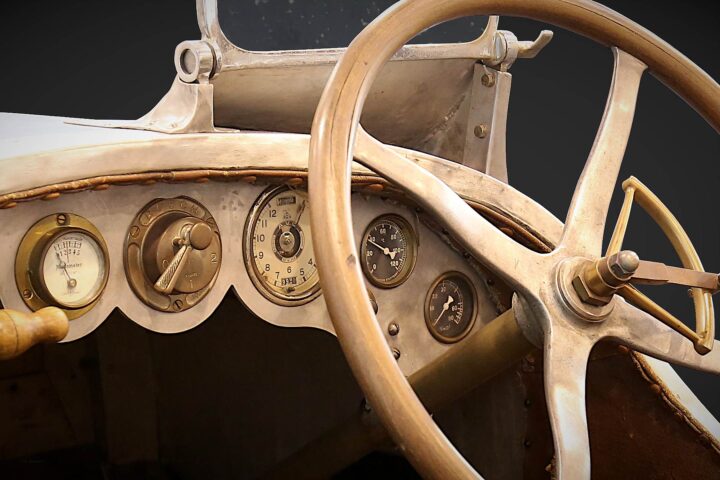
The 1920 Maybach Spezialrennwagen provides a fascinating glimpse into the engineering philosophy of early German racing automobiles.
This photograph focuses on its remarkable dashboard and driver’s environment, with a large wooden steering wheel surrounded by an array of period instruments and mechanical controls.
The combination of warm wood, brass-colored details, aged metal and ivory bodywork gives the photograph a distinctly historical character. It is an intimate view of a racing machine from an era when the driver was surrounded by mechanical instruments and directly connected to the machinery.
Kraaibeek Collector Edition No. 003.
1925 Alfa Romeo P2 Gran Premio – Interior
Inside a Pioneer of Grand Prix Racing
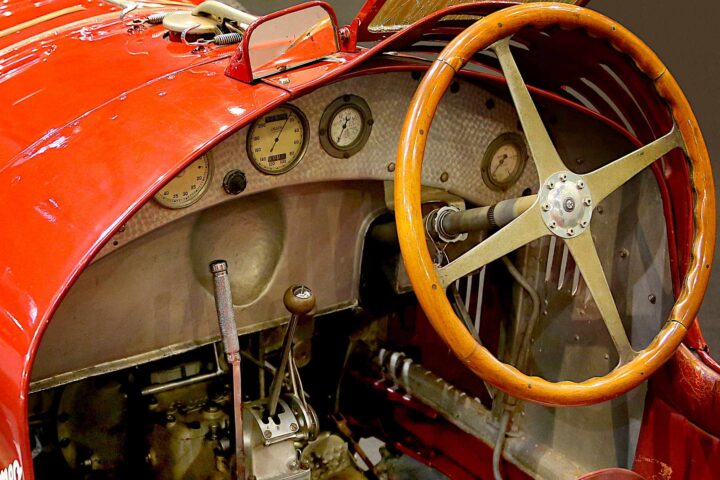
The 1925 Alfa Romeo P2 represents the pioneering spirit of Grand Prix racing. This photograph takes the viewer directly into its cockpit, where a large wooden steering wheel dominates the driver’s position alongside period gauges and exposed mechanical controls.
The combination of Alfa Romeo’s racing-red bodywork, warm wood, aged metal and functional instrumentation provides a fascinating glimpse into the uncompromising environment of early Grand Prix competition.
Rather than viewing a historic racing car as a polished museum object, this photograph reveals the machine from the driver’s perspective.
1927 Bugatti Type 35 Racing Car Interior – Classic Grand Prix Dashboard and Cockpit
Inside an Icon of Grand Prix Racing
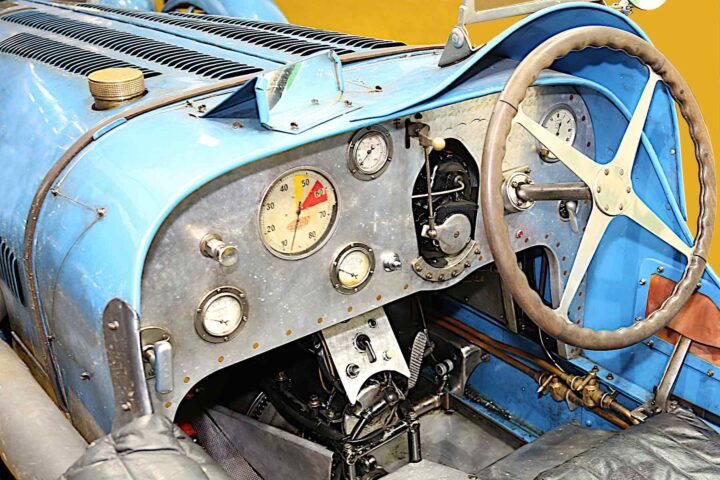
Few racing cars are as instantly recognizable as the Bugatti Type 35. Introduced in 1924, the Type 35 became a defining machine of the golden age of Grand Prix and road racing. Its lightweight construction, distinctive engineering and exceptional competition record established its place in motorsport history.
This photograph takes a different look at the legendary Bugatti. Rather than focusing on its famous horseshoe radiator and elegant exterior, it places the viewer inside the driver’s cockpit.
The large wooden steering wheel, period gauges, blue bodywork and exposed mechanical controls reveal the environment in which the driver experienced the car. There is remarkably little separating the driver from the machinery — a striking contrast to the sophisticated cockpits of modern racing cars.
Kraaibeek Collector Edition No. 004.
1927 Fiat 509 S Mille Miglia
Historic Italian Racing Car Dashboard
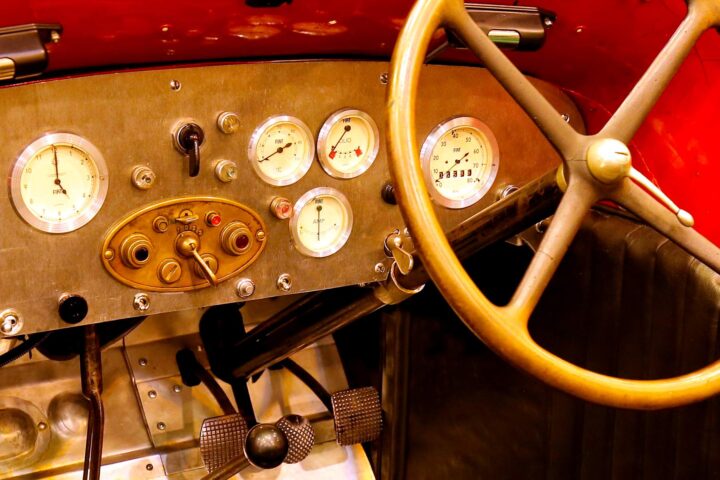
The cockpit of a 1927 Fiat 509 S Mille Miglia race car, with its period Fiat instruments, mechanical controls and distinctive wooden steering wheel. This close-up reveals the fascinating driver’s environment of an early Italian competition automobile and the mechanical simplicity of racing in the 1920s.
1936 Maserati V8RI
Inside a Rare Italian Racing Machine
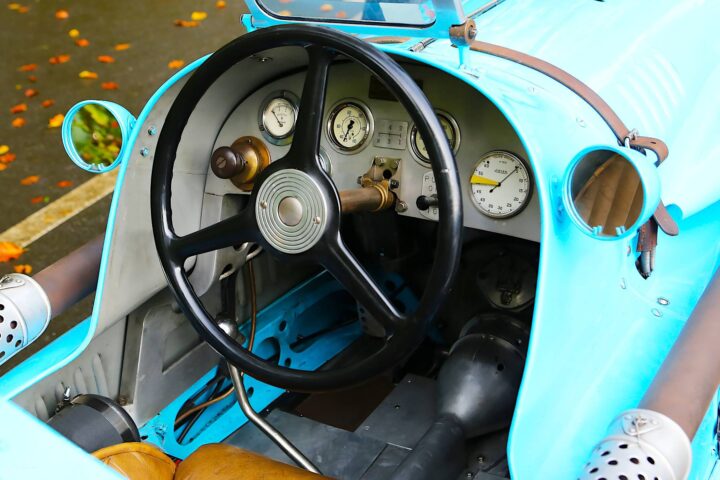
The 1936 Maserati V8RI is an exceptionally rare racing automobile, with only four examples built. This photograph reveals its distinctive driver’s cockpit, including the black steering wheel, period instrumentation, metal dashboard and vivid turquoise-blue bodywork.
It offers a very different perspective on this historic machine – focusing not on its exterior appearance, but on the environment surrounding the driver.
1939 Auto Union Type D – Grand Prix Cockpit
Inside a Silver Arrow Grand Prix Racing Car
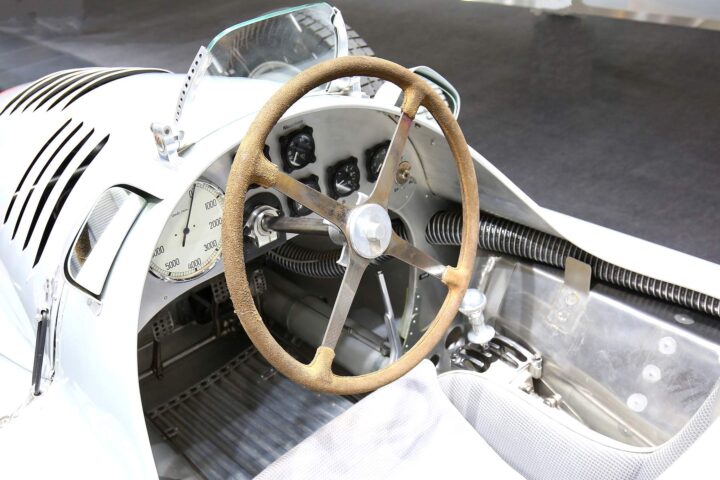
The Auto Union Type D was one of the extraordinary racing machines of the final years of the pre-war Grand Prix era. Developed for the 3-liter regulations introduced in 1938, it combined a supercharged V12 engine with the radical rear-engine architecture that distinguished Auto Union’s Grand Prix cars.
This photograph takes you inside the cockpit of the 1939 Type D, away from the spectacular streamlined bodywork and into the driver’s working environment.
The large steering wheel, vintage instruments, mechanical controls and exposed components reveal just how different a Grand Prix cockpit looked before the development of today’s highly sophisticated racing machines.
The 1939 version with twin superchargers produced 485 hp and reached approximately 330 km/h. Auto Union’s Type D also achieved major Grand Prix victories in 1939, including the French and Yugoslavian Grands Prix.
Looking at this cockpit, it is easy to appreciate how directly the driver was connected to the machinery. There was no modern protective cockpit, no digital instrumentation and no electronic interface—just the driver, the controls and an extraordinary piece of mechanical engineering.
Kraaibeek Collector Edition No. 005
1949 Bentley Special Mk VI 3/8
Classic British Racing Cockpit
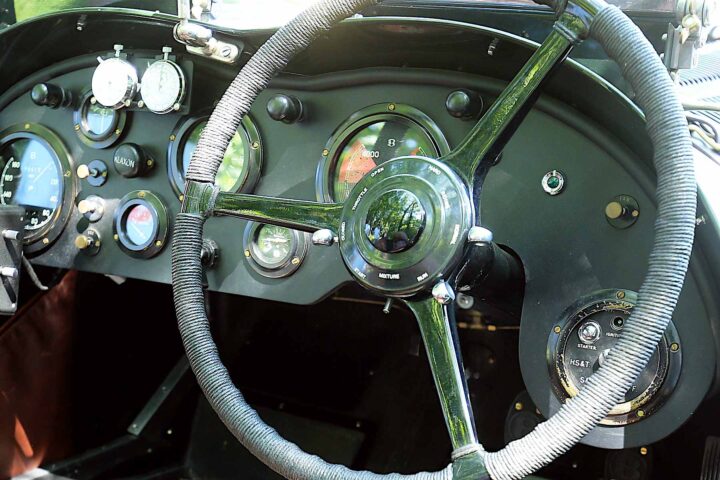
The cockpit of the 1949 Bentley Special Mk VI 3/8 combines functional racing instrumentation with the unmistakable character of classic British automotive design. The photograph focuses on the substantial instrument panel, period gauges, mechanical controls and large steering wheel, revealing the driver’s environment in remarkable detail.
With its aged metal surfaces, traditional instruments and handcrafted appearance, this Bentley Special cockpit provides a fascinating contrast to the highly digital dashboards of modern performance cars.
1950 AFM 50-5 Race Car Dashboard & Cockpit
Classic German Racing Cockpit
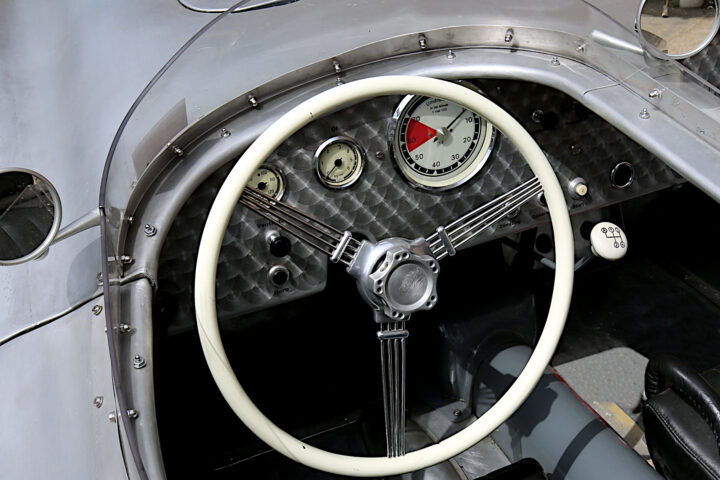
The cockpit of the 1950 AFM 50-5 showcases the functional character of early post-war racing cars. Its simple aluminum dashboard is dominated by a large cream-colored steering wheel and a collection of individual analog instruments. Built by Alexander von Falkenhausen Motorenbau in Germany, the AFM 50-5 was a lightweight competition car associated with the BMW 328-derived six-cylinder engine. This photograph captures the mechanical simplicity and focused driver environment of a pioneering German race car from the early 1950s.
1950 Patriarca Giannini 750 Sport Race Car Dashboard & Cockpit
Classic Italian Racing Cockpit
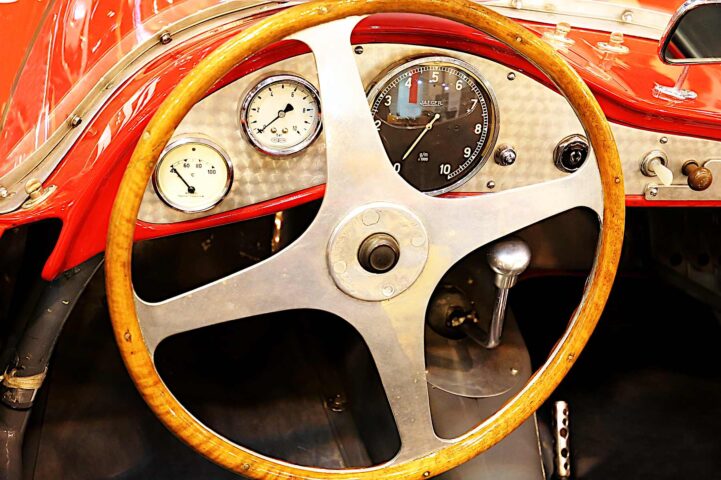
The cockpit of the 1950 Patriarca Giannini 750 Sport captures the distinctive character of early post-war Italian racing cars. A large wooden steering wheel dominates the minimalist aluminum dashboard, while individual Jaeger instruments and simple controls reflect the functional environment of a lightweight competition car. Associated with the Italian Etceterini racing tradition, Patriarca 750 Sport and Giannini-powered variants competed in major events of the period, including the Mille Miglia. This photograph celebrates the craftsmanship, mechanical simplicity and visual elegance of classic Italian motorsport.
1951 Veritas Meteor II Race Car Dashboard & Cockpit
A rare glimpse inside a post-war German racing machine
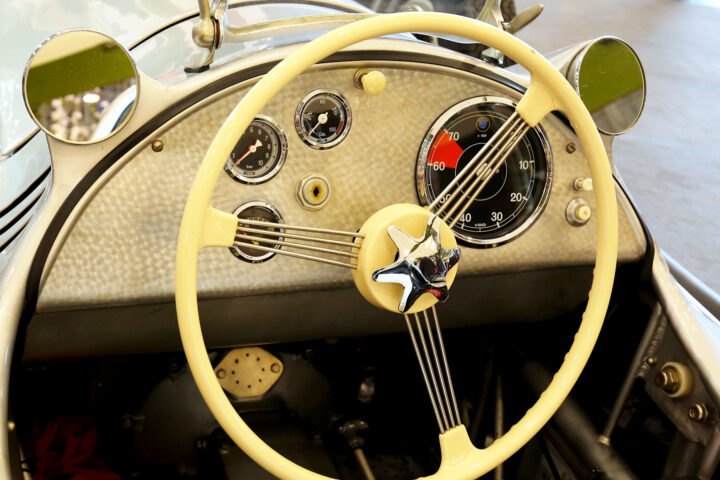
The 1951 Veritas Meteor II Rennwagen represents an important chapter in post-war German motorsport. This detailed cockpit photograph captures the character of the historic race car through its elegant ivory steering wheel, distinctive Veritas horn button, classic gauges and beautifully textured dashboard.
The image highlights the functional simplicity and craftsmanship of an early 1950s racing cockpit. Every instrument, switch and mechanical detail contributes to the authentic atmosphere of historic European motorsport.
Photographed by Peter Kraaibeek, this image is part of a growing collection of classic race car cockpits and dashboards, documenting the interiors and driving environments of remarkable historic racing machines.
1952 Talbot-Lago T26 Grand Sport Le Mans Spyder Dashboard
A Glimpse into the Golden Age of French Endurance Racing
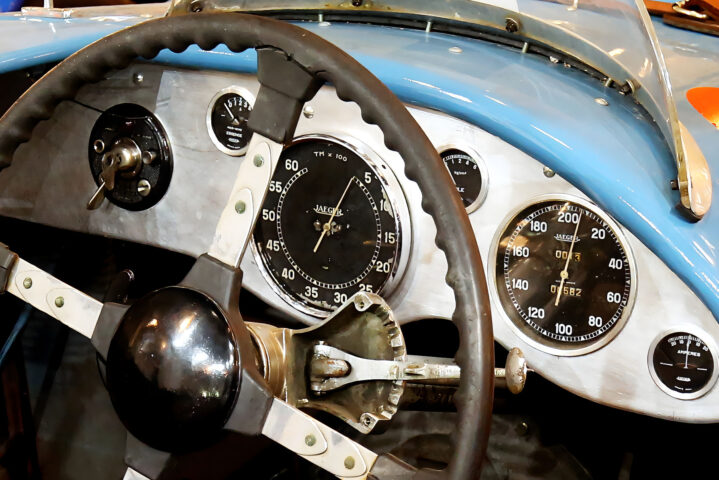
The 1952 Talbot-Lago T26 Grand Sport Le Mans Spyder represents the elegance and engineering of post-war French motorsport. Its cockpit combines a hand-crafted aluminum dashboard, Jaeger instruments, and a beautifully patinated steering wheel – an authentic glimpse into the uncompromising world of 1950s endurance racing.
Jaguar D-Type Race Car Dashboard & Cockpit — 1954–1957
A Destinctive 1950s Racing Dashboard
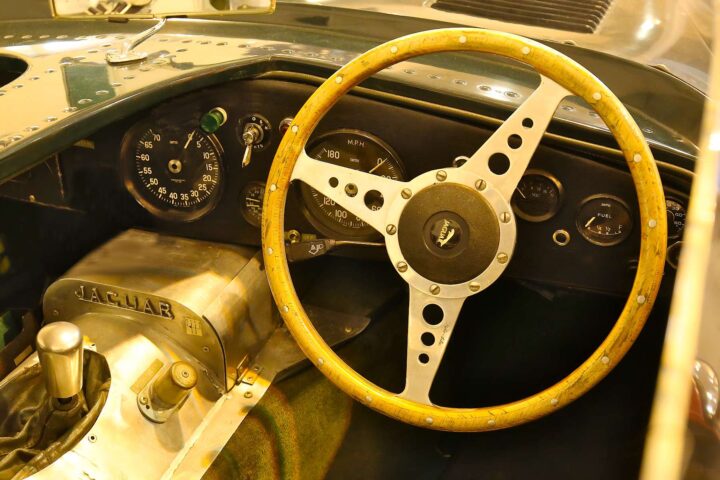
Step inside the cockpit of a Jaguar D-Type race car and explore the beautifully functional dashboard of one of the most iconic racing cars of the 1950s. This photograph highlights the classic instrument panel, wooden-rim steering wheel, gauges and period racing controls that characterize the D-Type’s driver-focused cockpit.