American Classic Car Dashboards – Vintage Automotive Interior Photography
American classic car dashboards represent one of the most fascinating chapters in automotive design history. From elegant Art Deco styling of the 1930s to the chrome-heavy optimism of the 1950s and the driver-focused muscle car interiors of the late 1960s and 1970s, American automotive dashboards reflected not only engineering progress, but also changing cultural trends, luxury expectations, and design philosophies.
Unlike many modern digital interiors, vintage American dashboards were created with strong visual personality and craftsmanship. Large analog gauges, sweeping chrome trim, colorful instrument panels, polished metal details, dramatic steering wheels, and futuristic shapes transformed automotive interiors into rolling works of industrial art. During the golden age of American automobiles, manufacturers competed not only through performance, but also through interior elegance, innovation, and driver experience.
This curated gallery explores some of the most iconic and visually distinctive American classic car dashboards and interiors from multiple automotive eras. The collection includes luxury cruisers, stylish convertibles, powerful muscle cars, and rare specialty automobiles that showcase the evolution of American automotive interior design.
The Elegance of 1940s and Early 1950s Dashboard Design
Early American automotive interiors combined elegant craftsmanship with strong Art Deco influences. Rounded gauges, painted metal surfaces, chrome accents, and carefully integrated controls created dashboards that still feel timeless today.
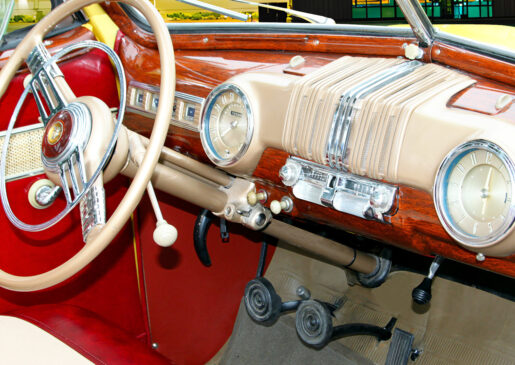
The dashboard of the 1947 Mercury Eight Convertible represents the transitional period between pre-war styling and the emerging optimism of post-war American automotive culture. Classic symmetry, polished materials, and elegant instrumentation highlight the craftsmanship of the era.

The 1952 Pontiac Chieftain DeLuxe introduced increasingly sophisticated interior styling while preserving the clean, balanced aesthetics that characterized early post-war American cars.
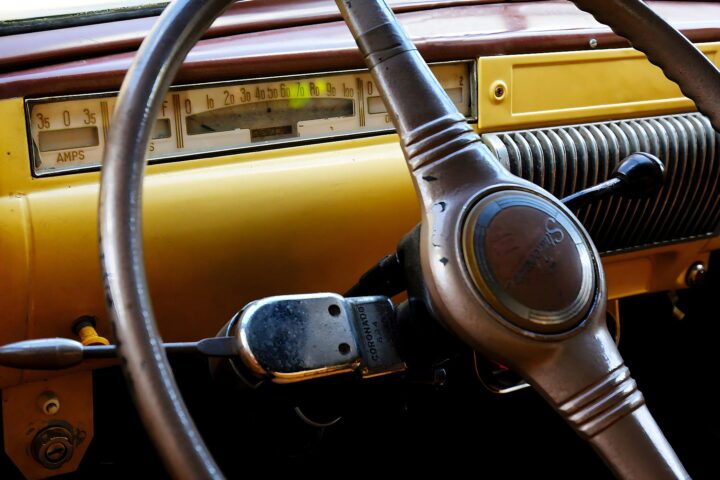
The interior of this Studebaker is as honest as its exterior. The ocher yellow instrument panel carries its original horizontal cluster of ammeter, speedometer, and fuel gauge, framed by a two-spoke bakelite steering wheel. Mounted on the steering column is a period aftermarket Coronado 524 turn signal switch, a detail that confirms both the truck’s age and the thoughtfulness of its owners, who added the accessory at a time when turn signals were not yet standard equipment on American vehicles. A dashboard photograph is available as a companion fine art print.
Chrome, Color and Futurism – The Golden Age of the 1950s
For many enthusiasts, the late 1950s represent the peak of American automotive dashboard design. Inspired by aviation, space-age technology, and the optimism of post-war America, manufacturers created interiors filled with chrome, sweeping shapes, colorful gauges, and futuristic instrument clusters.
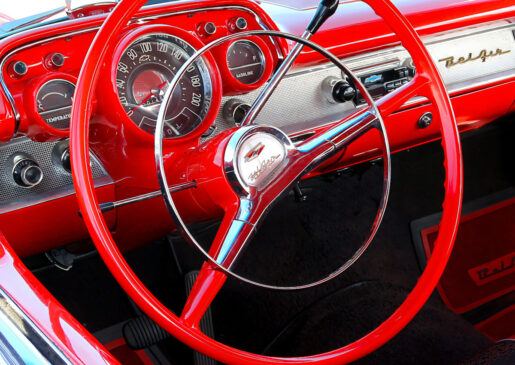
The 1957 Chevrolet Bel Air became one of the defining icons of 1950s American design, combining bright trim, bold styling, and instantly recognizable dashboard elements that remain legendary among collectors worldwide.
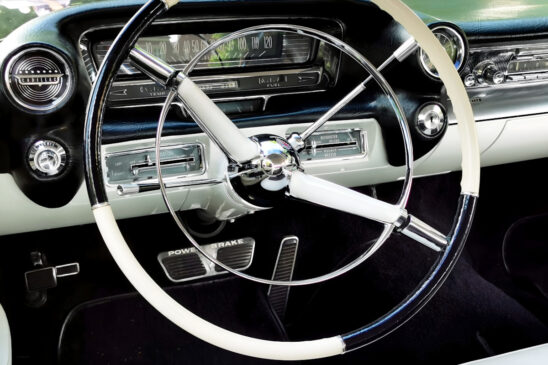
Equally spectacular, the 1959 Cadillac Fleetwood showcased the dramatic luxury and visual extravagance that defined Cadillac during the tailfin era. Rich chrome details, elegant instrumentation, and highly stylized controls transformed the interior into a symbol of American luxury and ambition.
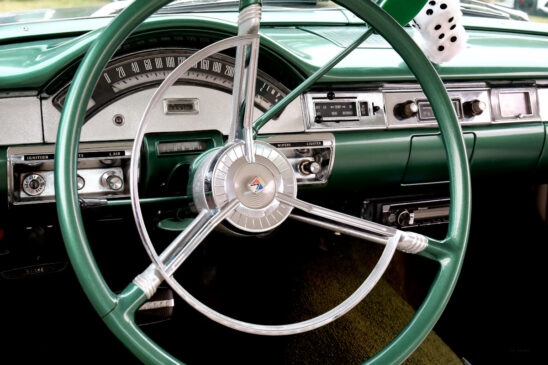
Other standout examples from this remarkable period include the 1957 Ford Fairlane 500 and the futuristic 1961 Chrysler Windsor AstraDome, whose innovative dashboard styling reflected the influence of the emerging space age on automotive design.
Muscle Cars and Driver-Focused Interiors
By the late 1960s and early 1970s, American dashboard styling evolved toward more performance-oriented layouts. Muscle cars emphasized sporty instrumentation, driver-focused controls, and bold interior themes while preserving the visual drama that characterized American automotive design.
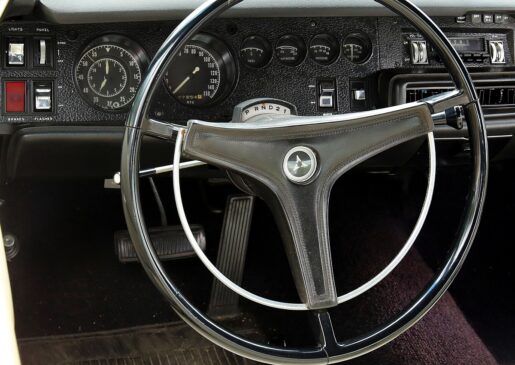
The legendary 1969 Dodge Charger represents the aggressive muscle car era with its powerful dashboard layout, deep-set gauges, and unmistakable performance-oriented styling.
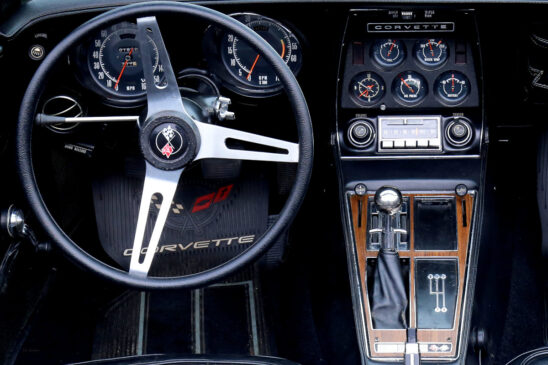
Similarly, the 1970 Corvette C3 combined sports car ergonomics with futuristic American design language, creating one of the most recognizable cockpit interiors of its era.
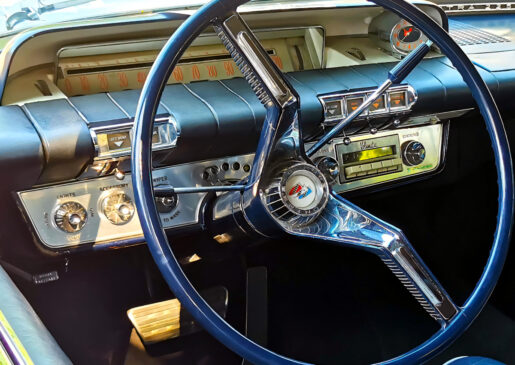
Luxury-oriented performance cars such as the 1960 Buick Electra 225 continued to balance comfort, elegance, and advanced instrumentation, demonstrating the diversity of American automotive interior design during this period.
Automotive Interior Photography and Dashboard Art
Classic car dashboards are more than functional control panels — they are historical design objects that capture the creativity, craftsmanship, and optimism of their time. Details such as analog gauges, chrome trim, steering wheels, radio controls, and textured materials continue to fascinate collectors, designers, photographers, and automotive enthusiasts around the world.
This gallery celebrates the artistry of vintage American automotive interiors through original photography focused on design details, craftsmanship, symmetry, and historical atmosphere. Selected images from this collection are also available as wall art prints, posters, framed artwork, and automotive-themed decor.
American classic car dashboards remain among the most visually distinctive automotive interiors ever created. Whether featuring the luxurious chrome-filled elegance of 1950s Cadillacs, the bold performance styling of muscle cars, or the handcrafted details of early post-war automobiles, these interiors continue to inspire automotive enthusiasts and collectors worldwide.
This collection highlights the evolution of American automotive dashboard design across multiple decades and showcases the enduring beauty of analog instrumentation, classic craftsmanship, and vintage automotive culture. Additional galleries featuring classic cars, muscle cars, supercars, steering wheels, gauges, and automotive interior photography can be explored throughout the website.